
VO₂ Max
The Ultimate Benchmark of Physical Capacity

ⓘ This is for informational purposes only. For medical advice or diagnosis, consult a professional.
While other health metrics provide snapshots of your systems, VO₂ Max tells the complete story. It answers a fundamental question: How much work can your body sustain?
What It Is
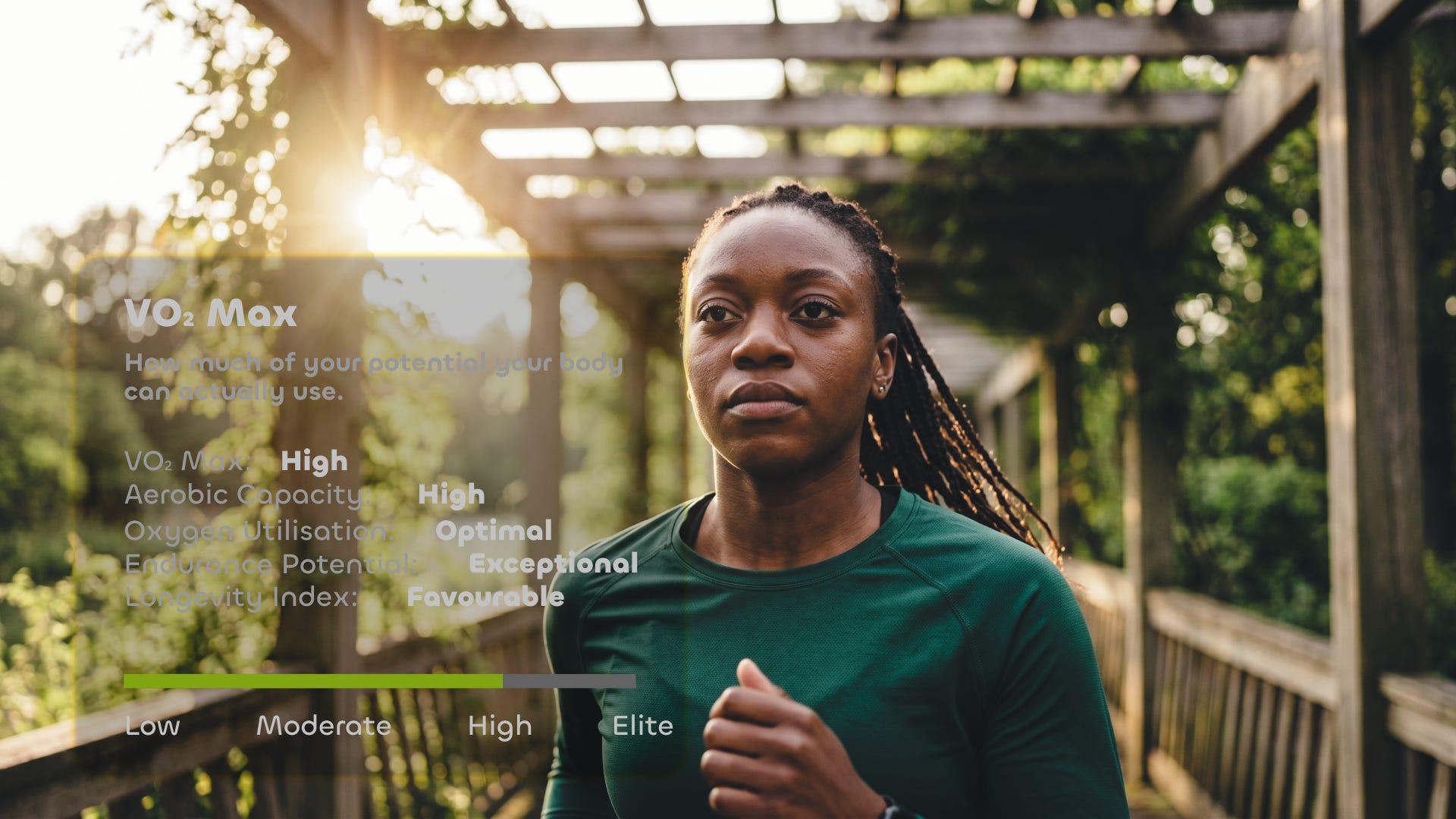
VO₂ Max (maximal oxygen uptake) is the maximum volume of oxygen your body can utilise during intense exertion. It is the gold standard for measuring aerobic fitness, reflecting the combined efficiency of your lungs (intake), heart (transport), and muscles (utilisation).
Measurement: Expressed as ml/kg/min (millilitres of oxygen per kilogram of body weight per minute).
Methods: Ranges from precision lab testing (metabolic carts) to wearable estimates and field benchmarks (like timed runs).
What “Optimal” Looks Like
Fitness is individual. While “Elite” status (60+ for men, 50+ for women) is a high bar, the most important metric is your personal progression.
For Men: 30–45 ml/kg/min (average), 50+ ml/kg/min (high fitness), 70+ ml/kg/min (elite)
For Women: 25–40 ml/kg/min (average), 45+ ml/kg/min (high fitness), 60+ ml/kg/min (elite)
The Science of Survival
VO₂ Max isn’t just for athletes. It is one of the strongest predictors of long-term survival and cardiovascular health.
High capacity leads to:
Increased Longevity: Strong correlation with reduced all-cause mortality.
Systemic Efficiency: Better metabolic health and lower chronic disease risk.
Resilience: An improved ability to bounce back from physical stress.
The Reframe: Effort vs. Capacity
Most people view fitness as effort (how hard you sweat). VO₂ Max reframes it as capacity (what your system can handle).
Old Goal: Short, exhausting bursts of intensity.
New Goal: Sustainable, repeatable performance.
Fitness isn’t just about how hard you can push, once. It’s about your ability to produce high output again and again.
Habits for Optimisation
Improving your ceiling requires a balanced, systemic approach rather than pure intensity.
Build the Base: Zone 2 training (moderate, steady-state) strengthens the heart’s stroke volume.
Test the Ceiling: Strategic High-Intensity Interval Training (HIIT) pushes the upper limits of oxygen utilisation.
Support the Frame: Strength training improves muscular efficiency and power.
Respect the Adaption: Recovery and sleep are when the actual physiological gains occur.
Lighten the Load: Managing body composition improves your ml/kg ratio, making every movement more efficient.
Share The Good Stuff
If this article made you pause, reflect, or see your body a little differently, there’s a good chance someone in your life would appreciate it too. If someone came to mind while you were reading this, consider gifting them a subscription today. It might just be the nudge they need to listen to their body a little more closely, and become better, every day.
Notifications On-The-Go
We’ve made it even easier to stay connected. For quick reads, performance tips, and updates from the Optimised Humans community while you’re on the move, join our WhatsApp Channel. You’ll get bite-sized insights, reminders, and early access to new articles — all delivered straight to your phone. Follow the link below and stay in the loop, wherever you are.
Remember to turn on notifications for the channel.