
Cortisol Rhythm
Your Body’s Internal Alarm Clock

ⓘ This is for informational purposes only. For medical advice or diagnosis, consult a professional.
Cortisol often gets a bad rep. It’s called the “stress hormone”, blamed for burnout, belly fat, poor sleep, and anxiety. But cortisol itself isn’t the enemy. In fact, without it, you wouldn’t have the energy to get out of bed in the morning.
What matters isn’t whether cortisol exists. It’s when and how it rises and falls.
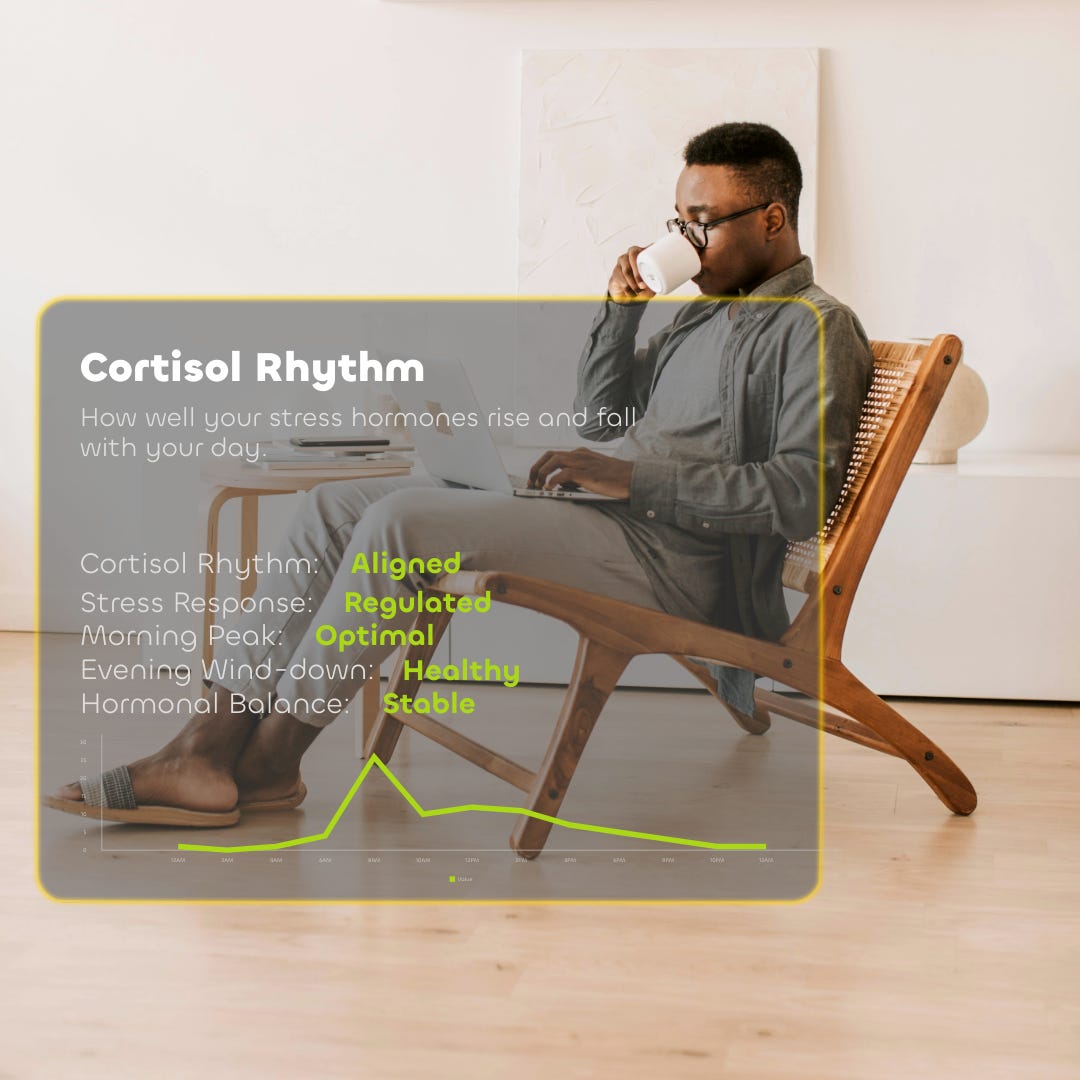
You see, your body is designed to release cortisol in a predictable rhythm across the day. When that rhythm is aligned, you feel alert in the morning, focused through the day, and naturally ready to wind down at night. When the rhythm is disrupted, everything feels harder.
How do you know where yours is? Most people track it by how they feel. Do you crash at 2:00 PM? Are you "tired but wired" at 10:00 PM? Doctors can test this via saliva or blood, but your daily energy levels are usually the best smoke detector.
Understanding cortisol rhythm is less about eliminating stress and more about restoring timing.
Let’s get into the science of it.
What We Need to Understand
Cortisol is managed by a fancy system called the HPA Axis (the communication line between your brain and your adrenal glands). Its main job is to mobilize energy. It handles your metabolism, blood sugar, and even how well your immune system fights off a cold.
The catch? Cortisol is designed for sprints, not marathons. When we’re stressed 24/7, that “sprint” hormone stays turned on. This messes with your ability to burn fat, think clearly, and stay emotionally balanced.
The “Needle Movers”:
The Bad Guys: Doomscrolling at midnight, irregular sleep, too much caffeine late in the day, and chronic “always-on” stress.
The Good Guys: Morning sunlight, consistent wake times, and knowing when to actually stop working.
Simple Habits to Fix the Rhythm
You don’t need to move to a monastery to fix your cortisol. You just need to anchor your day with a few “biological signals”:
☀️ Chase the Sun: Get outside within 20 minutes of waking up. Sunlight tells your brain to “start the cortisol clock” which actually helps you sleep better 15 hours later.
⏰ Pick a Wake-Up Time: Try to wake up within the same 30-minute window every day (yes, even on Saturdays). Your hormones love a routine.
🏃 Move Early, Rest Late: Exercise is great for cortisol, but try to do the intense stuff earlier in the day. High-intensity workouts late at night can “trick” your body into thinking it needs to stay awake.
📵 Dim the Lights: Bright screens are “fake sunlight”. Put the phone away an hour before bed to let your cortisol levels drop naturally.
🧘 Micro-Breaks: You don’t need an hour of meditation. Just two minutes of deep breathing after a stressful meeting tells your HPA axis: “We’re safe; you can stand down now.”
Share The Good Stuff
If this article made you pause, reflect, or see your body a little differently, there’s a good chance someone in your life would appreciate it too. If someone came to mind while you were reading this, consider gifting them a subscription today. It might just be the nudge they need to listen to their body a little more closely, and become better, every day.
Notifications On-The-Go
We’ve made it even easier to stay connected. For quick reads, performance tips, and updates from the Optimised Humans community while you’re on the move, join our WhatsApp Channel. You’ll get bite-sized insights, reminders, and early access to new articles — all delivered straight to your phone. Follow the link below and stay in the loop, wherever you are.
Remember to turn on notifications for the channel.