
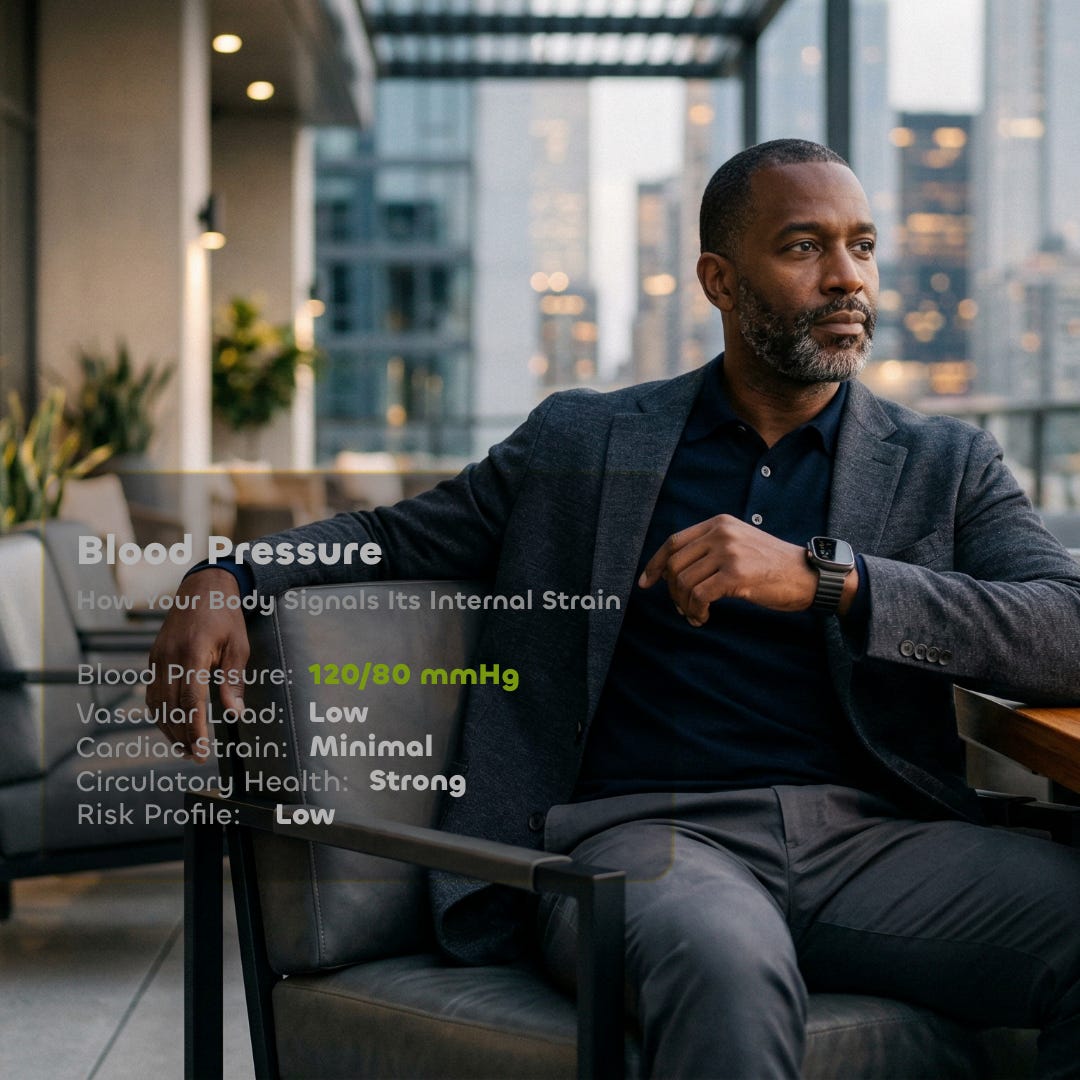
Blood Pressure
How Your Body Signals Its Internal Strain

ⓘ This is for informational purposes only. For medical advice or diagnosis, consult a professional.
Blood pressure is one of the most critical health signals your body produces, yet it’s the easiest to ignore. You can’t feel it rising, and you won’t notice it during your morning coffee or a busy workday.
Think of it as a “lifestyle dashboard”. Over time, these numbers quietly reflect the cumulative impact of your stress, recovery, movement, and nutrition. It isn’t just a clinical metric; it’s a real-time report on how your body is handling the pressure you live under.
Decoding the Numbers
Blood pressure measures the force of blood pushing against your artery walls. It’s always recorded as a pair:
Systolic (Top Number): The pressure when your heart contracts to pump blood out.
Diastolic (Bottom Number): The pressure when your heart relaxes between beats.
The Golden Standard: A reading of 120/80 mmHg is the traditional benchmark, but modern health targets often lean toward 110–115/70–75 mmHg for true longevity.
Pro Tip for Accuracy: Don't measure right after a stressful meeting or a double espresso. For a "true" reading, sit quietly for five minutes, feet flat on the floor, and keep your arm supported at heart level.
The Science
Your cardiovascular system is a delivery network for oxygen and nutrients. Blood pressure reflects the effort required to maintain that delivery.
When pressure stays high (Hypertension), your body pays the price:
Artery Wear and Tear: Vessels lose their “spring” and become stiff or scarred.
Heart Fatigue: Your heart has to thicken and work harder to push against the resistance.
Systemic Strain: This creates a domino effect leading to increased risks of stroke, kidney damage, and even cognitive decline.
The “Silent” Danger: You can have dangerously high blood pressure for a decade and feel completely fine, until you don’t.
The Lifestyle Load
Blood pressure isn’t just about genetics; it’s about your total lifestyle load. It’s a balance between “Pressurisers” and “Decompressors”.
The Pressurizers (Avoid)
Chronic, unmanaged stress
High sodium (hidden in processed foods)
Poor or inconsistent sleep
Sedentary lifestyle
Excessive alcohol consumption
The Decompressors (Prioritise)
Daily intentional movement (walking/cycling)
Potassium-rich whole foods
Strength training (builds vascular health)
Consistent 7–9 hours of sleep
Effective stress management (breathwork/meditation)
The Reframe: From Problem to Signal
Most people wait for a “bad” reading at the doctor’s office to take action. Don’t wait for the alarm to go off. Instead, view blood pressure as a feedback loop. It tells you exactly how much stress your body is carrying and how well you are recovering.
You don’t “feel” high blood pressure; you live the habits that create it.
Simple Habits for Optimisation
You don’t need a total life overhaul to see improvements. Focus on these repeatable wins:
🚶 Walk Daily: Simple zone 2 cardio (like a brisk walk) is medicine for your arteries.
🥗 Eat Real Food: Prioritise whole ingredients to naturally slash your sodium intake.
🛌 Protect Your Sleep: Sleep is when your heart rate and blood pressure naturally “dip” to recover.
🧘 Mind the Gap: Find five minutes a day to unplug. Lowering your mental load directly lowers your physical pressure.
💧 Hydrate Smart: Proper hydration helps maintain blood volume and keeps the “pipes” running smoothly.
Share The Good Stuff
If this article made you pause, reflect, or see your body a little differently, there’s a good chance someone in your life would appreciate it too. If someone came to mind while you were reading this, consider gifting them a subscription today. It might just be the nudge they need to listen to their body a little more closely, and become better, every day.
Notifications On-The-Go
We’ve made it even easier to stay connected. For quick reads, performance tips, and updates from the Optimised Humans community while you’re on the move, join our WhatsApp Channel. You’ll get bite-sized insights, reminders, and early access to new articles — all delivered straight to your phone. Follow the link below and stay in the loop, wherever you are.
Remember to turn on notifications for the channel.