
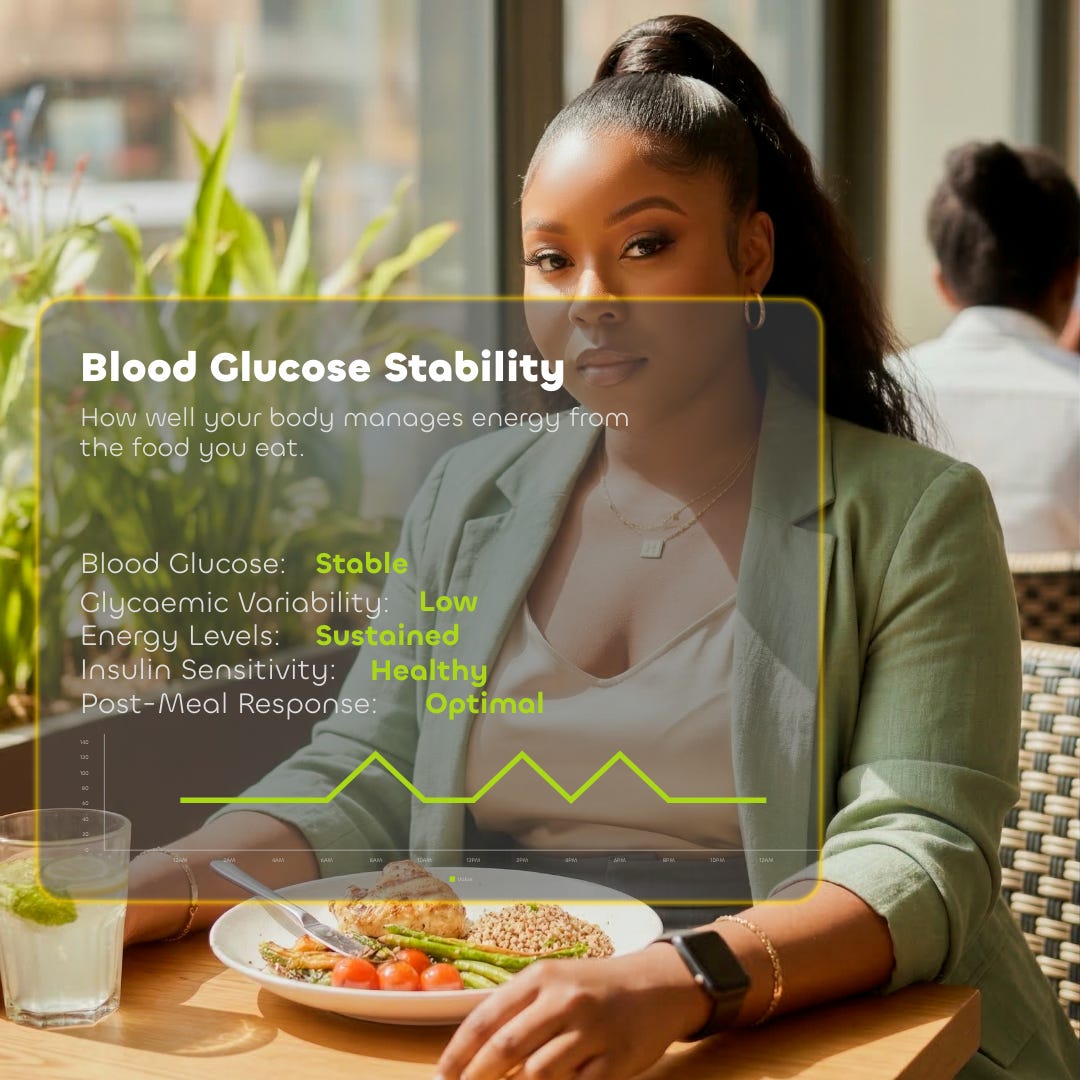
Blood Glucose Stability
How Well Your Body Manages Energy From The Food You Eat

ⓘ This is for informational purposes only. For medical advice or diagnosis, consult a professional.
Most people think "blood sugar" is only a conversation for your doctor. In reality, it’s a hidden remote control for your daily life. It’s the difference between a productive afternoon and a 3:00 PM "zombie mode" where you’d do anything for a nap or a snack.
When blood glucose rises and falls in stable patterns, you experience steady energy and sustained focus. When it spikes and crashes, the results are familiar: mid-morning fatigue; afternoon brain fog; and cravings that feel impossible to ignore.
Blood glucose stability isn’t about eliminating carbs or restricting food. It’s more about helping your body manage energy smoothly and efficiently.
Let’s get into the science of it.
What Exactly is Blood Glucose?
Think of glucose as liquid fuel in your pipes. It comes from the carbs you eat and powers everything from your morning jog to your deepest thoughts.
The Goal: You want a steady stream of fuel, not a flood followed by a drought.
Tracking: You can track this using clinical tests (HbA1c), old-school finger pricks, or modern CGMs (Continuous Glucose Monitors) that show your levels on your phone in real-time.
What Optimal Looks Like
As you move through your day, healthy glucose levels look more like a smooth curve that jagged spikes.
Fasting (Morning): 70–99 mg/dL (milligrams per decilitre)
Post-Meal: A gentle rise that returns to normal within 2–3 hours.
The Feeling: fewer energy crashes, better concentration, reduced cravings, and improved workout performance
The Science: How the “Crash” Happens
When you eat, your body breaks down carbs into sugar. Your pancreas then sends out Insulin: a “key” that unlocks your cells so the sugar can get inside and be used for energy.
The Problem: When you eat too much refined sugar at once, you get a massive spike. Your body panics, dumps a ton of insulin, and “over-cleans” the blood.
The Result: Your sugar levels crater. This is the crash, which triggers cravings because your brain thinks it’s starving.
What Moves the Needle
Spike Promoters: Sugary drinks, “naked” carbs (bread/pasta with no protein), stress, and crappy sleep.
Stabilisers: Fibre, protein, healthy fats, and muscle movement.
Simple Hacks for All-Day Energy
You don’t need a restrictive diet to win this game. Just use these five “levers”:
“Dress Up” Your Carbs: Never eat a carb alone. Pair that rice with chicken. Fibre, protein, and fat slow down sugar absorption.
The 10-Minute Walk: Taking a short walk after a meal acts like an “energy vacuum”, prompting your muscles to soak up glucose without needing extra insulin.
The “Whole” Rule: Choose foods that look like they did in nature (veggies, beans, grains). They take longer to digest, giving you a slow-release energy burn.
Sleep is a Shield: Just one night of bad sleep makes your body “leaky” with glucose, leading to higher spikes the next day.
Chill Out: High stress releases cortisol, which dumps stored sugar into your blood even if you haven’t eaten a thing.
Share The Good Stuff
If this article made you pause, reflect, or see your body a little differently, there’s a good chance someone in your life would appreciate it too. If someone came to mind while you were reading this, consider gifting them a subscription today. It might just be the nudge they need to listen to their body a little more closely, and become better, every day.
Notifications On-The-Go
We’ve made it even easier to stay connected. For quick reads, performance tips, and updates from the Optimised Humans community while you’re on the move, join our WhatsApp Channel. You’ll get bite-sized insights, reminders, and early access to new articles — all delivered straight to your phone. Follow the link below and stay in the loop, wherever you are.
Remember to turn on notifications for the channel.